
Pheromone pest control is a fast-growing pest control technology that is gradually replacing the use of traditional synthetic insecticides. It is an environmentally sustainable technology increasingly used as a key component of Integrated Pest Management (IPM) to reduce reliance on traditional synthetic insecticides. The global agricultural pheromones market is expanding, with projections suggesting a robust Compound Annual Growth Rate (CAGR) of 8.94% to 17.87% over the coming years. African Applied Chemical (AAC) has entered into strategic partnerships with pheromone pest control suppliers to use the Bi-Ko technology to slowly release pheromone actives. Methyl eugenol and enriched ginger oil were infused into the Bi-Ko fibres at a level of 15 wt.%. Processing of the slow-release fibres was possible at very low processing temperatures, as the pheromones have a strong plasticizing effect.
The fibres were converted to a non-woven textile. Gas chromatography results showed that Bi-Ko™ fibres are releasing the pheromones in sufficient quantities for effective pest attraction.
Controlling agricultural pests with pheromones is an emerging technology that is being rapidly adopted as an alternative to synthetic insecticides. The most common method involves using female sex pheromones to attract and kill males, leading to population collapse. These pheromones are also used for early detection, reducing costs and improving control effectiveness.
Why “Slow-Release” Matters
In traditional pest control, volatile compounds like pheromones can evaporate too quickly to be effective over a full growing season. The Bi-Ko™ technology acts like a reservoir, ensuring a steady “scent trail” is maintained over time. This is crucial for:
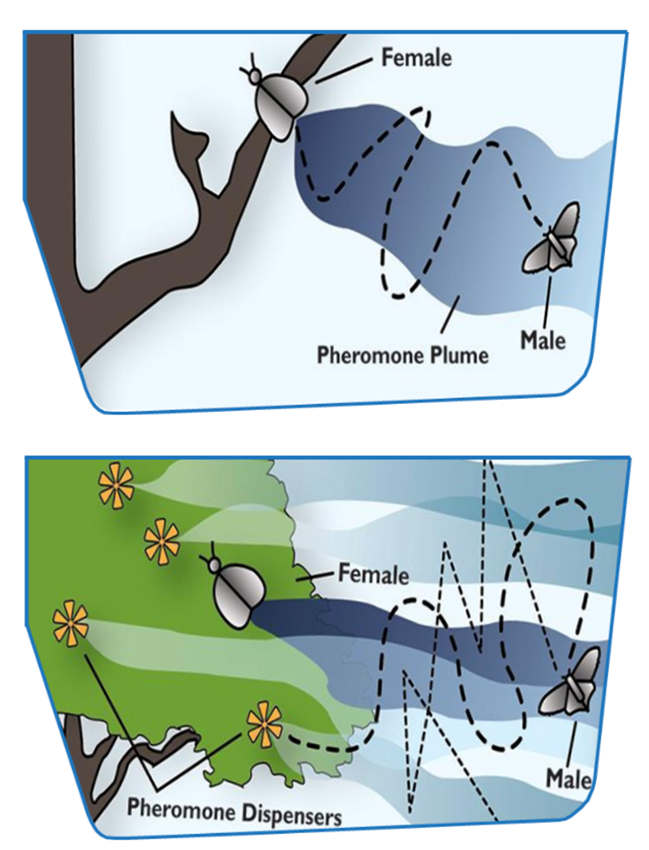
- Mating Disruption: Confusing male insects so they cannot find females.
- Mass Trapping: Luring pests into traps consistently over many weeks.
- Monitoring: Providing accurate data on pest populations to time interventions perfectly.
Sustainability Impact
By using pheromones instead of traditional chemicals, this technology offers a species-specific approach. It targets only the pest in question, leaving beneficial insects like bees and ladybugs unharmed, while leaving zero toxic residue on food crops. The partnership with pheromone trap suppliers to incorporate EGO and other pheromones into products using Bi-Ko™ slow-release technology aims to reduce the volume of pheromones required per trap, resulting in significant savings.
Furthermore, this cost reduction may allow pheromone technology to be applied to low-margin crops like maize. This is particularly relevant as the Department of Agriculture is currently seeking innovative solutions to combat the invasive fall armyworm.
See Figure 1 for a demonstration of how the Slow-release Pheromone traps for sustainable agricultural pest control.
Current results indicate that using Bi-Ko™ technology for the slow release of pheromones is feasible. Our next steps will involve optimizing the amount of pheromone incorporated into the fibers to minimize usage, maximize savings, and lower the overall cost of the technology.


